
Boron Carbide Ceramics Properties
- Low thermal conductivity
- Susceptible to thermal shock failure
- Outstanding hardness
- Extremely brittle
- Semiconductor
- Good thermal-neutron capture
Boron Carbide Powder Properties (Theoretical)
| Compound Formula | CB4 |
| Molecular Weight | 55.26 |
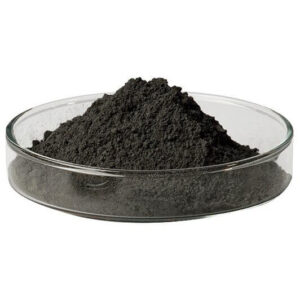
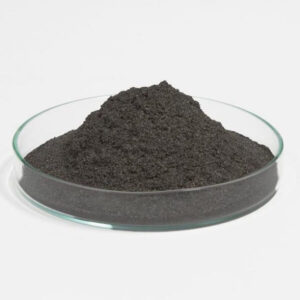
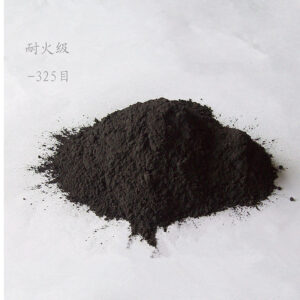
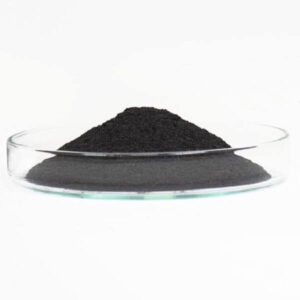
| Appearance | Gray/black solid |
| Melting Point | N/A |
| Boiling Point | N/A |
| Density | 2.1 to 2.7 g/cm3 |
| Solubility in H2O | N/A |
| Electrical Resistivity | 0 to 11 10x Ω-m |
| Poisson’s Ratio | 0.17-0.18 |
| Specific Heat | 950 J/kg-K |
| Tensile Strength | 350 MPa (Ultimate) |
| Thermal Conductivity | 31 to 90 W/m-K |
| Thermal Expansion | 4.5 to 5.6 µm/m-K |
| Vickers Hardness | 26 MPa |
| Young’s Modulus | 240 to 460 GPa |
| Exact Mass | 56.037222 |
| Monoisotopic Mass | 56.037222 |