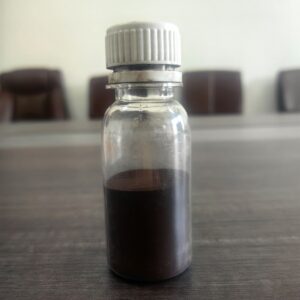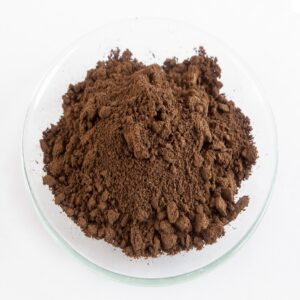
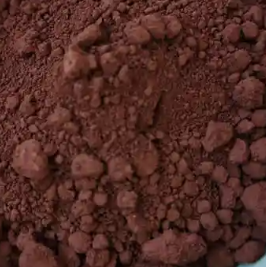
Currently, the amorphous boron powder widely used in the boron powder market is mainly crude boron with a high impurity content produced by the magnesian thermal reduction method. The magnesian thermal reduction method is simple, has a high yield, and relatively low cost. Because standards vary greatly across different fields, the definition of “amorphous boron powder” is not entirely consistent.
Amorphous Non-crystalline Boron
- Based on the specific gravity of boron, it is divided into amorphous boron and crystalline boron. Amorphous boron has a specific gravity below 1.73 g/cm³.
- The widely used amorphous boron is formed by reduction at around 1000℃, of which 60% is α-rhombic crystalline boron,And 40% is amorphous boron, a mixture of crystalline and amorphous.
- Due to its small particle size and uniform distribution, amorphous boron has high activity.
| ITEM | B90 | B95 | B99 | B99.9 |
| B | 90-95 | 95-99 | 99-99.9 | 99.9MIN |
| O | 3.0 MAX | 2.5MAX | 1.0MAX | 0.01MAX |
| MG | 5.0 MAX | 2.0MAX | 0.1MAX | 0.01MAX |
APPLICATIONS
- Boron powder with a boron content of 90% is generally used in applications where high boron content is not required, such as delay, combustion, and ignition.
- Boron powder with a boron content of 95%–99% is a high-quality material for rocket propellants and explosives due to boron’s high mass heat and volume heat, resulting in a large specific impulse.
- Boron powder with a boron content of over 99% is an electronic material that acts as a deoxidizer, antioxidant, and catalyst. It plays a crucial role in semiconductor manufacturing, influencing the conductivity and crystal structure of semiconductors, thereby affecting device performance and reliability. It is commonly used in high-end products such as electronic materials and semiconductor diffusion, where higher boron purity is required.