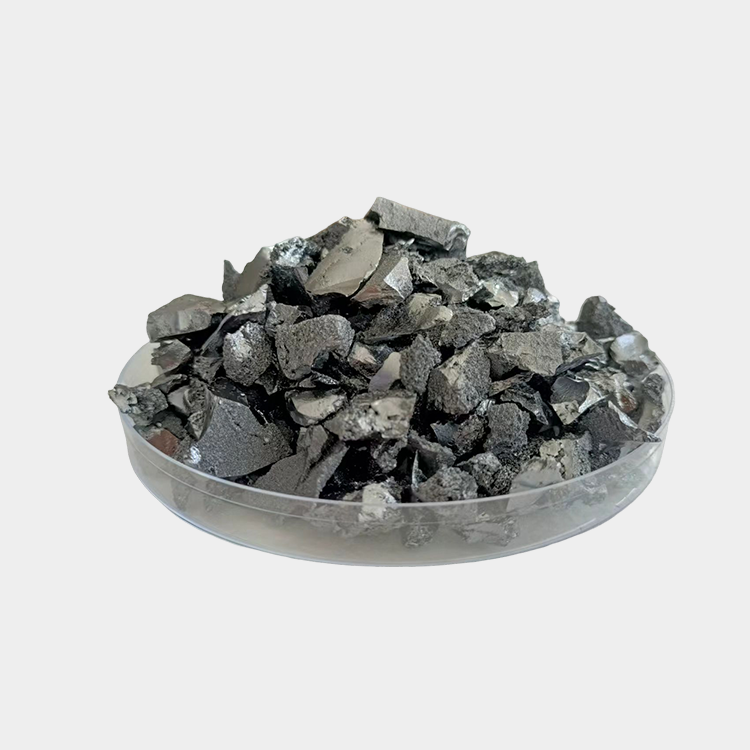
PRODUCT INTRODUCTION OF CRYSTALLINE BORON POWDER
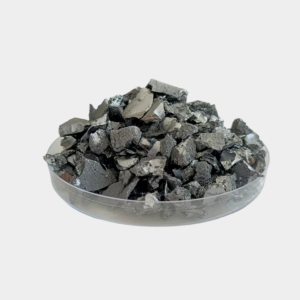
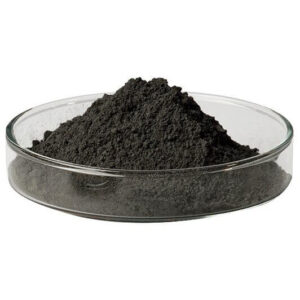
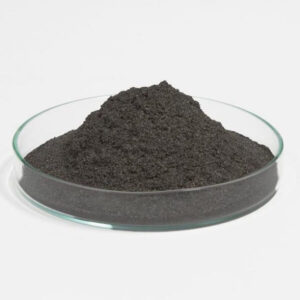
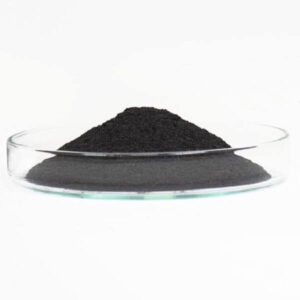
The crystal type of boron is mainly β-shaped, and the β-shaped and γ-shaped cubes are synthesized to form a fixed crystal structure. The color is usually taupe powder or brown particles with irregular shape.
The company is specialized in the production of CRYSTALLINE boron source manufacturers, but also the invention of CRYSTALLINE boron production technology research and development units. The regular particle size of the CRYSTALLINE boron powder produced by our company is 15-60μm; The conventional grain size of CRYSTALLINE boron particles is 1-10mm (special grain size can be customized according to customer needs), generally divided into 2N, 3N, 4N, 5N, 6N five specifications according to the purity.
TYPICAL SIZE
| BORON CONTENT | TYPICAL SIZE |
| 99 | 1-5UM 10-30UM 50-100UM |
| 99.9 | -200MESH 0-10UM 1-10MM |
| 99.99 | -200MESH 1-10MM |
| 99.999 | |
| 99.9999 |
2N CRYSTALLINE BORON
| B | FE | AU | AG | CU | SN | MN | PB |
| % MIN | PPM MAX | ||||||
| 99 | 500 | 2.5 | 1 | 12 | 30 | 300 | 0.08 |
Packaging: Usually packed in vacuum aluminum foil bag, the size is 1kg/5kg (nano powder only sealed, no vacuum)
3N CRYSTALLINE BORON
| B | FE | AU | AG | CU | SN | MN | PB | CA |
| % MIN | PPM MAX | |||||||
| 99.9 | 200 | 0.08 | 0.8 | 10 | 9 | 3 | 0.3 | 18 |
Packaging: powder-type CRYSTALLINE boron packaging is usually packed in vacuum aluminum foil bag, the specification is 1kg/5kg/ bag; Granular CRYSTALLINE boron packaging is generally polytetrafluoroethylene bottle, filled with inert gas protection, specifications for 50g/500g/1000g/ bottle.
4N CRYSTALLINE BORON
| B | FE | AU | AG | CU | SN | MN | PB | CA |
| % MIN | PPM MAX | |||||||
| 99.99 | 90 | 0.06 | 0.3 | 0.1 | 0.1 | 1.2 | 1.1 | 0.2 |
Packaging: Usually PTFE bottle, filled with inert gas seal, size 50g/100g/ bottle;
5N CRYSTALLINE BORON
| B | FE | AU | AG | CU | SN | MN | CA | AS | PB | W | GE |
| % MIN | PPM MAX | ||||||||||
| 99.999 | 8 | 0.02 | 0.03 | 0.03 | 0.1 | 0.1 | 0.1 | 0.08 | 0.08 | 0.05 | 0.05 |
Packaging: Usually PTFE bottle, filled with inert gas seal, size 50g/100g/ bottle;
6N CRYSTALLINE BORON
| B | FE | AU | AG | CU | SN | MN | CA | AS | PB | W | GE |
| % MIN | PPM MAX | ||||||||||
| 99.9999 | 0.5 | 0.02 | 0.03 | 0.03 | 0.08 | 0.07 | 0.01 | 0.01 | 0.02 | 0.02 | 0.04 |
Packaging: Usually PTFE bottle, filled with inert gas seal, size 50g/100g/ bottle;
APPLICATIONS
Nuclear Industry
Crystal boron has important applications in the nuclear energy field. It can be used as a neutron reaction control material in nuclear reactors, primarily to compensate for and regulate neutron reactivity and to facilitate emergency shutdowns, thus maintaining the stable operation of the reactor. Crystalline boron not only has a high neutron absorption cross-section but also a wide neutron energy absorption range, effectively reducing or regulating the neutron flux produced by nuclear energy, thereby ensuring the safety of the nuclear energy system.
Semiconductors
Crystal boron is also widely used in the semiconductor industry. As a p-type dopant, crystalline boron can be used to modify the conductivity of semiconductor materials. By doping silicon with crystalline boron, the conductivity properties of silicon can be altered, thereby creating semiconductor devices with different conductivity types, such as diodes and field-effect transistors. Furthermore, crystalline boron can also be used as a source material for growing single-crystal semiconductor materials. Boron-doped silicon single crystals can be grown using a melt method for the fabrication of high-performance semiconductor devices.
Optics
Crystal boron also has wide applications in the optical field. Due to its excellent nonlinear optical properties, crystalline boron can achieve functions such as light modulation, frequency sweeping, and frequency doubling. Therefore, crystalline boron is widely used in optical devices, including optical modulators, optical frequency combs, and lasers. Furthermore, crystalline boron can also be used as a gain medium in infrared lasers, exhibiting a large emission cross-section and a wide excitation spectrum range.
High-hardness materials
Crystalline boron can also be used to prepare high-hardness materials, such as boron carbide (B4C) and graphite boron compounds (Bg). Boron carbide is a very hard ceramic material with excellent wear resistance and high-temperature resistance, and is therefore widely used in the manufacture of bulletproof vests, hard cutting tools, abrasives, and wear-resistant ceramics. Graphite boron compounds are materials with a graphite-like structure, exhibiting high electrical conductivity and thermal stability, and can be used to prepare high-performance conductive binders, thermally conductive materials, and friction materials.
Thermal batteries
Thermal batteries are primary thermally activated storage batteries using molten salt as the electrolyte. They have advantages such as small size, light weight, long storage time, maintenance-free operation, rapid and reliable activation, and a wide operating temperature range, and are widely used in the ignition devices of some strategic and conventional weapons. The anode material of a thermal battery plays a decisive role in its specific capacity, volume, and specific power. Anode materials for thermal batteries have evolved from the initial magnesium-based and calcium-based materials to the current lithium-based materials. Among them, Li-B alloys possess outstanding advantages such as high specific energy, high specific power, low polarization, electrochemical potential close to that of pure lithium, and remaining in a solid state above 600℃, making them the most promising anode material for thermal batteries. They are already being gradually applied in high-end thermal batteries.
Crystal boron is hailed as the “industrial MSG” and “military vitamin.”
Crystalline boron is an important inorganic functional material with a wide range of applications: high-purity boron ceramic ballistic materials, high-purity boron delay agents, high-purity boron welding agents, high-purity boron explosives, and high-purity boron fuel-rich and oxygen-poor rocket propellants.
High-purity boron copper alloys, high-purity boron titanium alloys, high-purity boron diamond polycrystalline alloys, high-purity boron superhard wear-resistant tools, high-purity boron corrosion-resistant steel plates, high-purity boron nickel alloys, high-purity boron chromium alloys, lithium-boron alloys, new battery materials, and boron-magnesium superconducting alloys.
High-purity boron nano-coated powder materials are applied to the surface of a substrate using sputtering technology. This makes the components wear-resistant, corrosion-resistant, high-temperature resistant, oxidation-resistant, and anti-aging. It can meet the requirements of engines under the extremely harsh service conditions of aerospace and aviation, and can also meet special requirements such as optoelectronics and magnetism.